
The small tables where peace begins
How the peace of nations depends upon the habits of ordinary people
By Rita El-Mounayer
As SAT-7 broadcasts messages of peace, reconciliation and forgiveness to people gathered around tables in homes across the Middle East and North Africa, we should never underestimate the impact one programme can have on a family. And, through them, an entire community.
Fayza, a teenage girl from the Holy Land, forgave her friends who had hurt her.
Kamiar, an Iranian man, reconciled with his siblings after not speaking to them for seven years.
Rym, a mother-of-two from Algeria, sought help to work through problems with her husband.
None of these stories from SAT-7 viewers made the news.
Peace rarely does.
The Peace of Smaller Places
We tend to consider peace as something vast and global.
Beauty pageant contestants wish for “world peace”. School children paint white doves. Crowds march for an end to war.
And, somewhere far away, peace is negotiated by presidents, diplomats and generals seated at enormous tables.
At such tables ceasefires are announced and historic agreements signed. But they are not the only tables at which peace is made.
I learnt this growing up during Lebanon’s civil war. We longed for ceasefires. We prayed for the guns to fall silent. But when they did, we discovered that silence was not the same as peace.
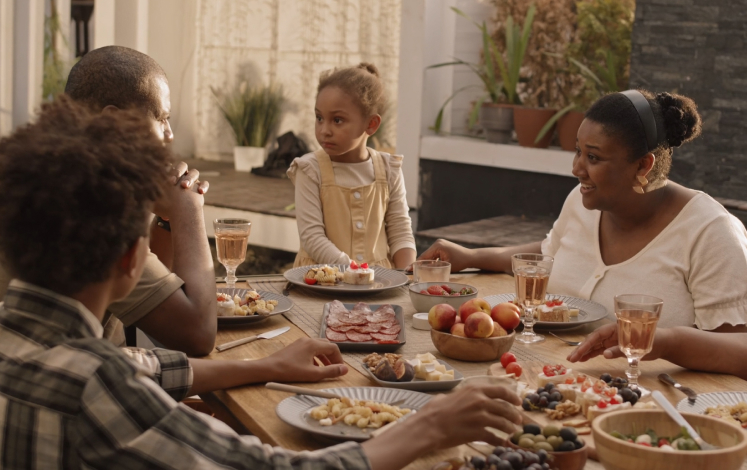
The negotiating tables may stop the shooting. But peace also happens in much smaller places: around kitchen counters, family tables, school desks. Tables where families, neighbours and communities meet, listen, apologise, forgive. And begin again.
It’s a smaller peace, perhaps, but no less important. A child who sees disagreement resolved without cruelty learns that conflict need not end in violence. A neighbour who is welcomed becomes more difficult to fear. A grievance surrendered is one less inheritance of hatred.
The peace of nations depends upon the habits of ordinary people. And what happens around our smallest tables eventually reaches the largest ones.
The Carpenter’s Table
Before Jesus began His public ministry, He was a carpenter. He understood the patience required to build something new: the measuring and shaping, the strengthening and joining together of separate pieces.
Later, tables became part of how He built peace between people.
At Matthew’s table, Jesus ate with tax collectors and others condemned as sinners.
He sat at the table of Simon the Pharisee, a member of a religious group whose leaders frequently questioned and opposed Him.
And, during the Last Supper, Jesus shared bread and wine with the friends He knew would betray, deny and abandon Him.
At the tables of Jesus, the condemned found mercy, the excluded were welcomed, and the fallen were restored.
He came not merely to speak about peace but to actively build it. Only changed hearts can begin to break the cycles of fear, hatred and revenge that cause people to fight and attack.
Pull Out A Chair
The theme of this year’s International Day of Peace is “Invest in Peace: For Everyone, Everywhere, Every Day.”
I have seen followers of Christ build this kind of peace in the Middle East.
For years, Lebanon lived under Syrian occupation. Yet when war later forced Syrian families to seek refuge there, many Lebanese believers opened their homes, churches and tables.
SAT-7 made room too, with new programmes co-presented by Syrians and Lebanese together.
We saw Syrians not only receiving help but giving back: serving, sharing, creating. What a beautiful image of forgiveness and reconciliation. A picture of the Church as it’s meant to be.
Most of us will never sit at the tables where peace agreements are signed. But every day, we gather around kitchen tables, school tables and church tables. There, we decide whether to listen or dismiss, welcome or exclude, forgive or retaliate.
Christ, the Carpenter and Prince of Peace, invites each of us to pull out a chair. Begin a conversation. Make room for grace.
This is where peace begins.
PLEASE PRAY
- that families across the MENA will build peace through listening, forgiveness and grace.
- that SAT-7’s programmes will inspire reconciliation within homes and communities.
- that followers of Christ will welcome those excluded by fear, hurt or prejudice.

Listen to SAT-7’s podcast, Around the Table, where we bring together voices from across the UK, the Middle East, and North Africa for honest, hopeful, and thought-provoking conversation. Click here to listen.